

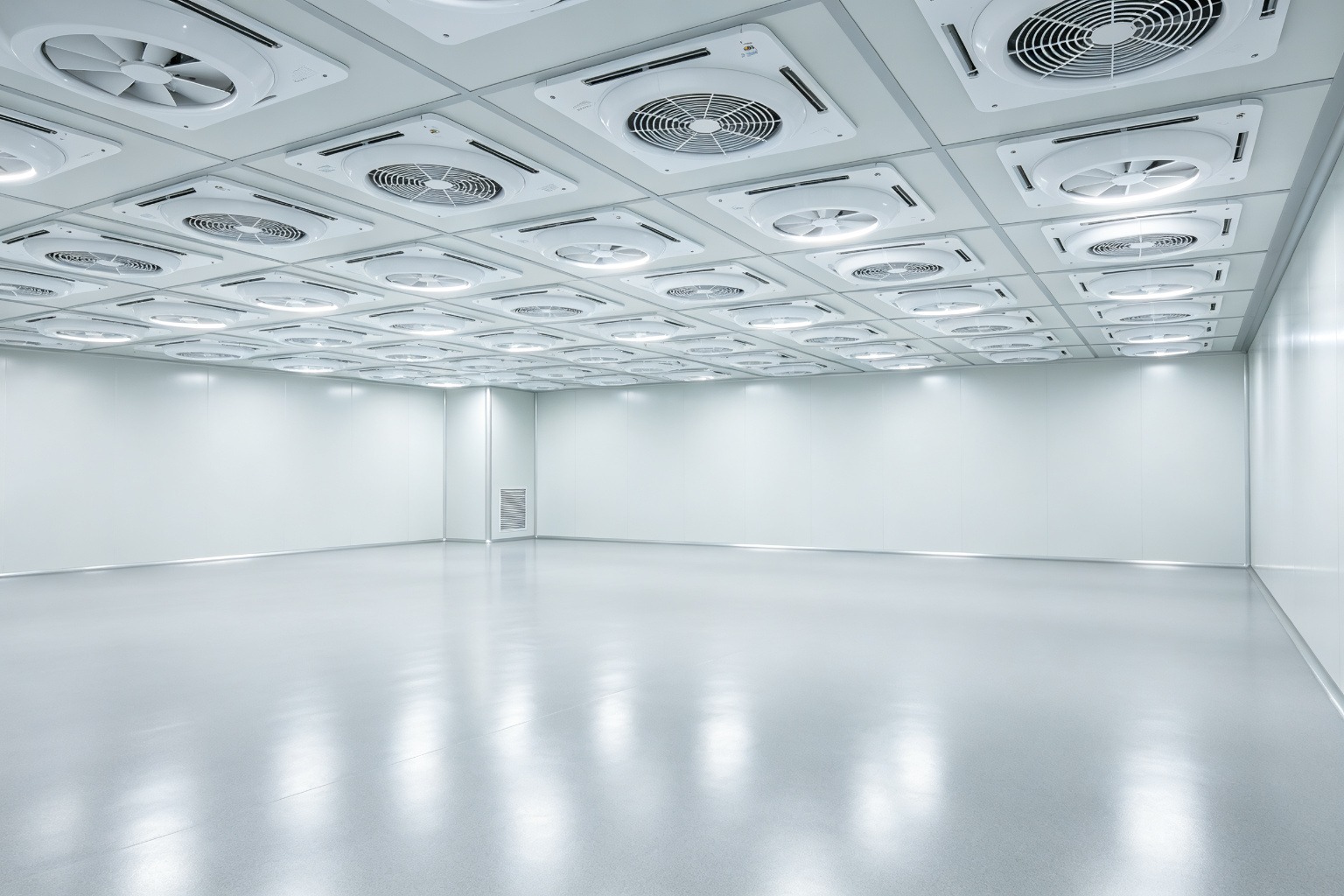
Figure 1. The cleanliness class of a room drives its air-change rate, filter grade and layout.
Before you can specify a single filter or fan, you need to know what class of cleanroom you are building. ISO 14644-1 defines cleanroom classes by the maximum concentration of airborne particles allowed, and that number drives everything else — air-change rate, filter grade, layout and cost.
What ISO 14644-1 says
Under ISO 14644-1, a class is defined by the maximum number of particles per cubic meter at specified particle sizes. For example, an ISO 5 room may contain no more than 3,520 particles ≥ 0.5 µm per cubic meter, while an ISO 8 room allows 3,520,000.
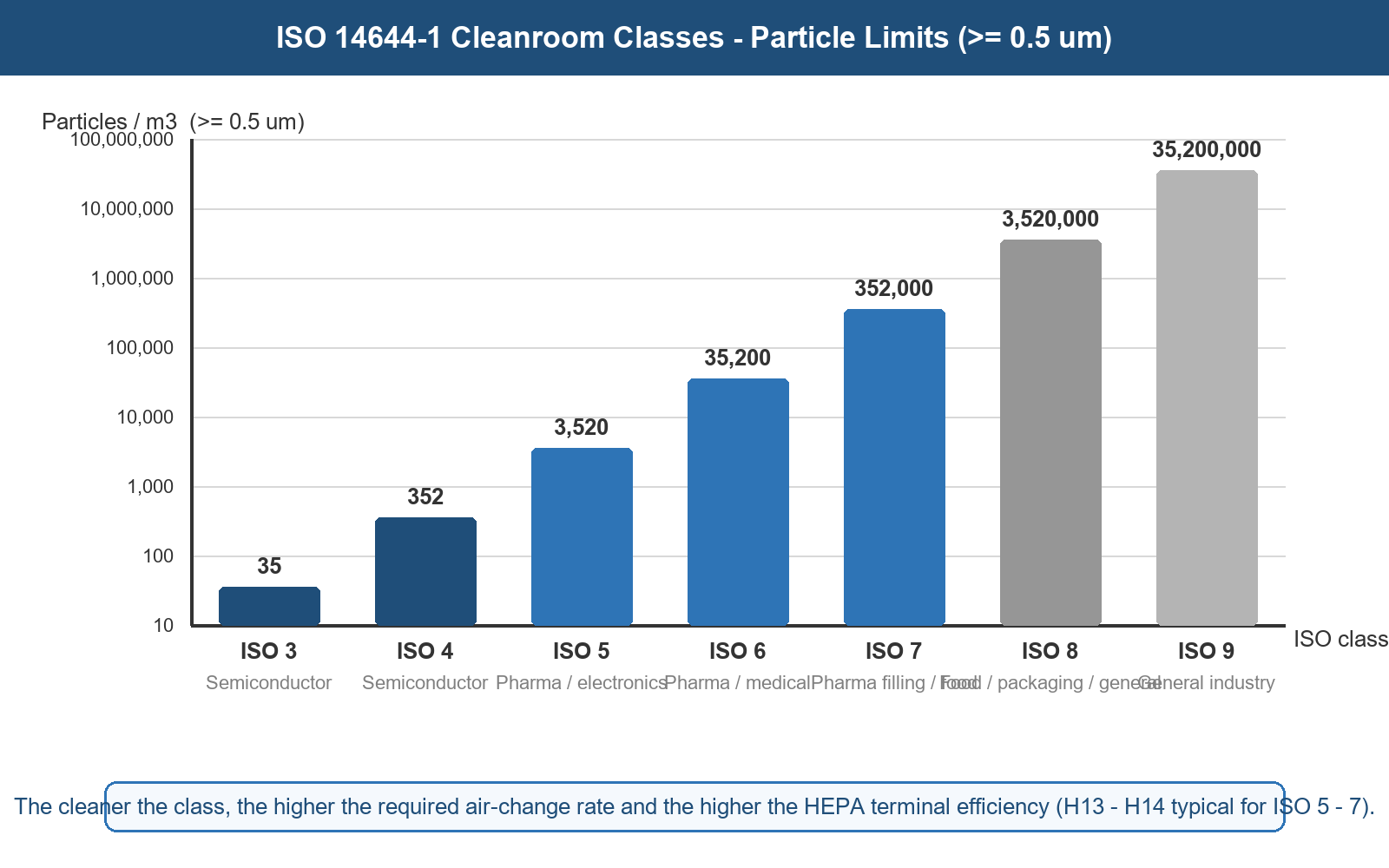
Figure 2. ISO 14644-1 particle limits (≥ 0.5 µm) from ISO 3 to ISO 9.
Table 1. ISO classes, typical air-change rates and typical uses (air changes are typical practice, not fixed requirements).
| ISO class | Max particles ≥ 0.5 µm (per m³) | Typical air changes/hour or airflow pattern | Typical uses |
|---|---|---|---|
| ISO 3 | 35 | Unidirectional flow (0.36 – 0.54 m/s) | Semiconductor, advanced R&D |
| ISO 5 | 3,520 | 300 – 600 | Pharma aseptic filling, electronics |
| ISO 6 | 35,200 | 150 – 300 | Medical devices, clean assembly |
| ISO 7 | 352,000 | 60 – 90 | Pharma preparation, food, electronics |
| ISO 8 | 3,520,000 | 15 – 30 | Food packaging, general industry |
| ISO 9 | 35,200,000 | 10 – 15 | General ventilation-grade rooms |
Confirm air-change rates with your validation engineer before finalizing the HVAC design.
Old names you will still hear — FS 209E
Many existing facilities are still described with the retired US Federal Standard 209E: Class 100, Class 10,000 and Class 100,000. The rough equivalents are Class 100 ≈ ISO 5, Class 10,000 ≈ ISO 7 and Class 100,000 ≈ ISO 8. When a supplier quotes either name for the same room, they usually mean the same target.
Air changes and the filtration stages behind them
The higher the class, the more air must be changed and filtered. Clean air is built in stages:
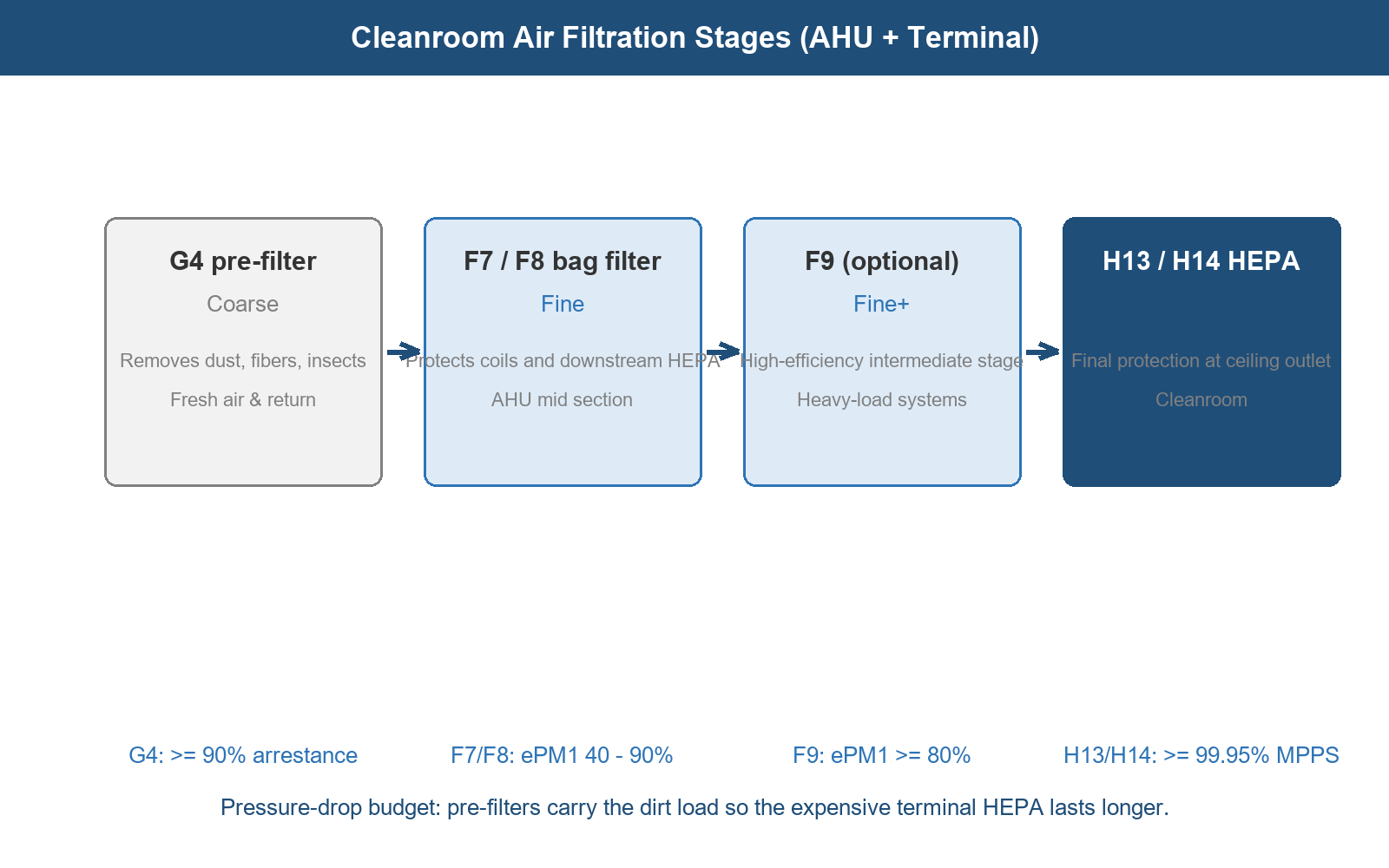
Figure 3. A typical cleanroom air filtration train from G4 pre-filtration to H13/H14 terminal HEPA.
- G4 pre-filter: protects the AHU and removes coarse dust from fresh and return air.
- F7/F8 bag filters: clean the air before it reaches the terminal stage; they are the main dirt-carrier of the system.
- H13/H14 HEPA terminal: the final barrier at the ceiling outlet that defines the room’s cleanliness.
Which HEPA grade for which class?
Table 2. Typical terminal HEPA grades by ISO class (H-grades per ISO 29463; H10–H12 ≈ EN 1822 E10–E12).
| ISO class | Typical terminal grade | Notes |
|---|---|---|
| ISO 5 | H14 (ULPA for critical processes) | Leak-tested installation, often unidirectional flow |
| ISO 6 | H13 | Leak-tested installation, often unidirectional flow |
| ISO 7 | H13 | Most common cleanroom terminal |
| ISO 8 | H12 – H13 | Lower-cost HEPA still recommended |
The cleanliness class is achieved by the system — air changes plus terminal filtration plus room discipline — not by the filter alone. A higher-grade HEPA cannot compensate for poor sealing or too few air changes.
Testing and certificates to ask for
- Filter efficiency per EN 1822 for HEPA/ULPA (tested at MPPS), or ISO 16890 for general ventilation filters.
- System tests per ISO 14644-3: airflow, pressure difference, containment leak and particle count.
- Supplier quality system: ISO 9001, plus CE documentation for EU markets.
WISHE TECH’s documentation set covers ISO 9001, CE, EN 779 / EN 1822 and ISO 16890 references for export markets — request test reports with your quotation.
From class to purchase order in four steps
- Fix the class: define the maximum particle count your process can tolerate.
- Calculate airflow: room volume × air changes per hour.
- Select the train: G4 → F7/F8 → H13/H14, sized at 75–85% of rated flow.
- Specify the details: frame material, gasket type, custom dimensions and spares.
Send WISHE the room size, target class and process type, and our engineers will return the filter schedule, equipment list and quotation.
Not sure which class you need? Tell us your process and area — WISHE will help you define the class and the filtration train to match. Contact us via wishe.tech.
About WISHE TECH — Factory-direct cleanroom systems and industrial filtration supplier with 20+ years of engineering experience. Six product categories cover cleanroom filtration, spray booth & coating filters, cleanroom equipment, build-out materials, static control & ESD, and coating & curing equipment, with OEM customization and export support for Southeast Asia, the Middle East and the Americas. Visit wishe.tech to request a quote.