

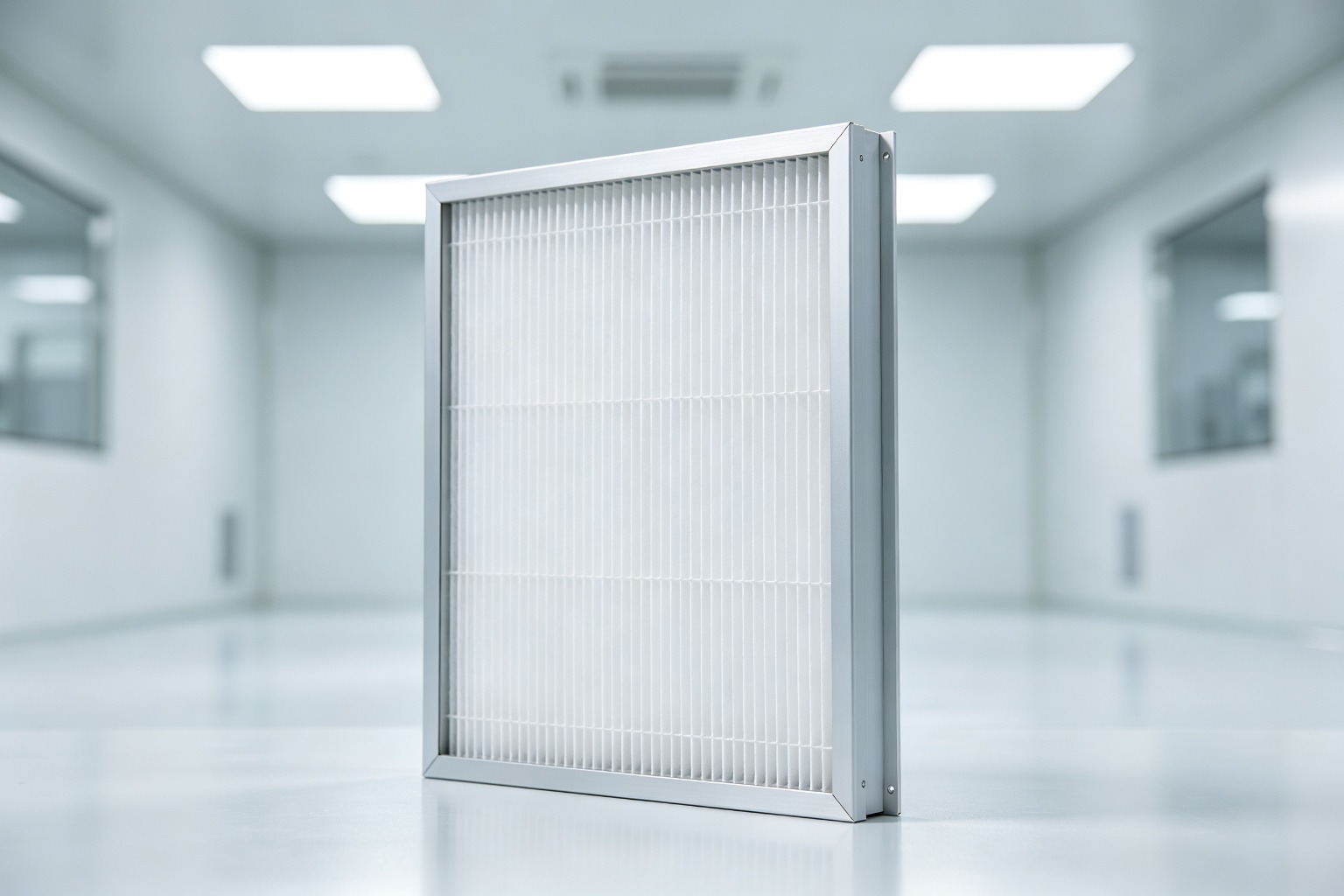
Figure 1. Mini-pleat HEPA filters are the standard terminal filter in modern cleanroom ceilings.
A HEPA filter is the last line of defense between your cleanroom and the particles that could ruin a batch, a wafer or a sterile product. Chosen correctly, it quietly protects your process for years; chosen by price alone, it may cost you in rework, energy bills and failed audits. This guide walks through the six decisions that matter most — efficiency grade, airflow, pressure drop, frame material, gasket type and replacement planning — so you can specify the right HEPA filter the first time (Figure 1).
What exactly is a HEPA filter?
HEPA (High-Efficiency Particulate Air) filters are tested for efficiency at their Most Penetrating Particle Size (MPPS) — the particle size at which the filter is least efficient, typically around 0.1–0.3 µm — under EN 1822. EN 1822 grades high-efficiency filters in three families: EPA (E10–E12), HEPA (H13–H14) and ULPA (U15–U17); many suppliers, including WISHE TECH, label catalogs with the equivalent ISO 29463 nomenclature (H10–H14, where H10–H12 correspond to E10–E12). An H13 filter must capture at least 99.95% of particles at MPPS; an H14 filter at least 99.995%. For cleanroom terminal applications, H13 and H14 are the grades that matter.
Standards note: EN 779:2012 (the old G1–G4 / M5–M6 / F7–F9 classification) was withdrawn in 2018 and superseded by ISO 16890 (published 2016), which grades general-ventilation filters as ISO Coarse, ePM10, ePM2.5 and ePM1. The G/F letters remain common trade shorthand: G4 ≈ ISO Coarse (≥ 90% arrestance), F7 ≈ ePM1 40–65%, F8 ≈ ePM1 65–90%, F9 ≈ ePM1 ≥ 80%. Buyers in the Americas often specify HEPA per IEST-RP-CC001 instead — for example 99.97% @ 0.3 µm (roughly H13) or 99.99% @ 0.3 µm (roughly H14) — and general-ventilation filters by MERV (F7–F8 ≈ MERV 13–14, F9 ≈ MERV 15–16). The equivalences are approximate because the test methods differ.
Construction matters as much as grade. Mini-pleat HEPA filters fold the media into tight pleats so a large surface area fits into a shallow frame — more dust holding capacity, lower pressure drop and a compact footprint. Separator-type HEPA filters use corrugated separators between the pleats, which makes them robust for high-load industrial duty (Figure 2).
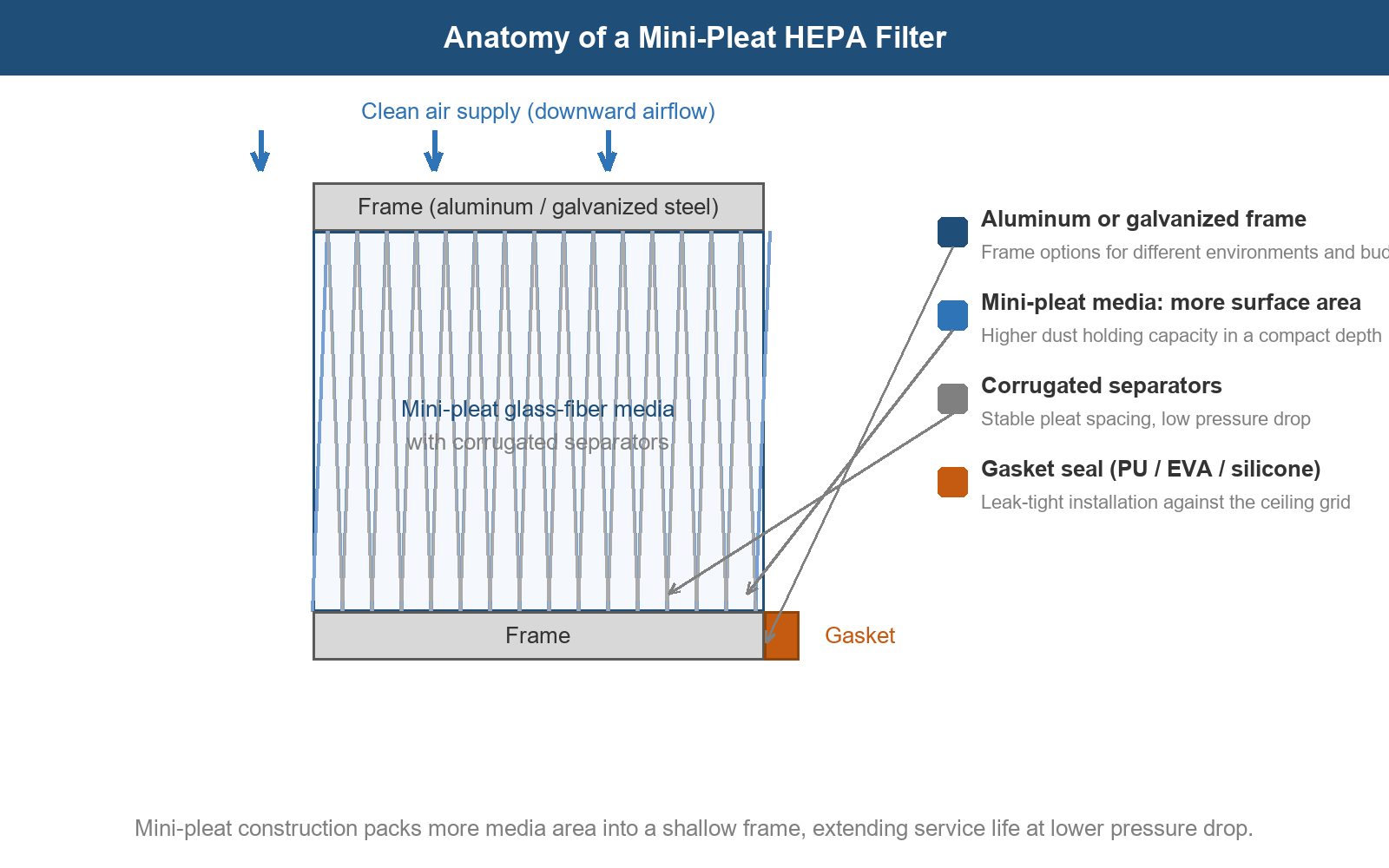
Figure 2. Anatomy of a mini-pleat HEPA filter: frame, pleated media, separators and gasket.
WISHE TECH supplies mini-pleat HEPA filters in H10–H13 (ISO 29463 nomenclature) with aluminum frames for cleanroom terminal filtration, and separator HEPA filters in H11–H13 with galvanized frames for industrial air systems.
Step 1 — Match efficiency grade to cleanliness class
The grade should be driven by your target ISO class, not by a supplier’s default (see the grade ladder in Figure 3). As typical industry practice:
Table 1. Typical HEPA terminal grades by ISO class (industry practice; H-grades per ISO 29463, H10–H12 ≈ EN 1822 E10–E12; confirm with your validation team).
| Target ISO class | Typical terminal grade | Notes |
|---|---|---|
| ISO 5 | H14 (ULPA for critical processes) | Leak-tested installation, unidirectional flow |
| ISO 6 | H13 | Leak-tested installation, often unidirectional flow |
| ISO 7 | H13 | Most common cleanroom terminal |
| ISO 8 | H12 – H13 | HEPA still recommended for reliability |
| ISO 9 / general | H10 – H12 | Intermediate-level filtration |
H14 costs more than H13, but it cuts particle penetration tenfold — from 99.95% to 99.995% at MPPS (500 ppm to 50 ppm penetration). That margin matters in pharmaceutical filling and semiconductor lithography. If your process genuinely needs ISO 5 or cleaner, budget for H13/H14 with a leak-tested installation.
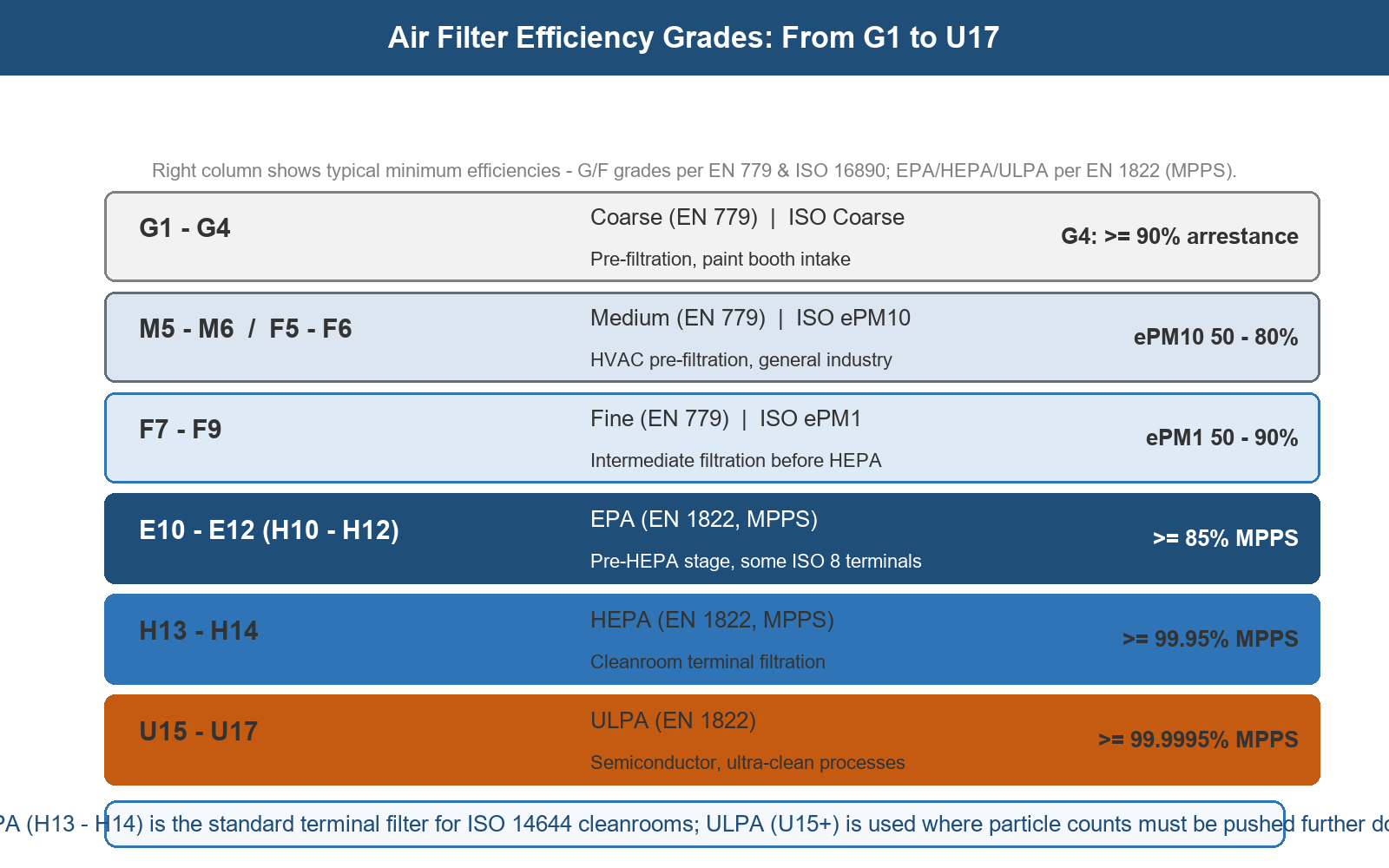
Figure 3. Efficiency grades from coarse pre-filters to ULPA, and where each belongs.
Step 2 — Size for airflow
Start from the air-change rate your class requires, then calculate: required supply airflow = room volume × air changes per hour. Divide by the filter’s rated airflow to find the number of terminal filters.
Example: a 100 m² room with a 2.7 m ceiling running at 60 air changes per hour needs roughly 16,200 m³/h. A 610 × 610 mm HEPA with a manufacturer rating of about 1,000 m³/h would give around 19–22 terminal units when operated at 75–85% of rated flow. If you instead size by face velocity, use the 0.45 m/s ± 20% (0.36–0.54 m/s) common for unidirectional-flow terminal filters (about 600 m³/h per 610 × 610 mm unit at 0.45 m/s) and plan for roughly 27 units. What matters is that the operating point — not the maximum rating — drives the unit count.
Rule of thumb: never size a HEPA at its maximum airflow rating. Running at 75–85% of rated flow extends service life and keeps pressure drop in a comfortable band.
Step 3 — Check initial and final pressure drop
Pressure drop is the hidden operating cost. A lower initial resistance means lower fan energy for the life of the filter; a realistic final resistance tells you when to replace it (Figure 4).
For a typical H13 mini-pleat filter, expect an initial pressure drop of roughly 200–250 Pa at rated airflow. Industry practice is to replace HEPA terminals when the differential reaches about 2× the initial value — roughly 400–500 Pa for a 200–250 Pa initial resistance. For intermediate filters such as medium-efficiency box filters (F6–F9), WISHE recommends a final resistance of 400–500 Pa; these filters can handle up to 125% of rated airflow for short-term peaks, but design for 100% in continuous service and check the datasheet for pressure drop and efficiency at the peak point.
Fan energy can be estimated as P (kW) = ΔP (Pa) × Q (m³/h) ÷ (3.6 × 10⁶ × η), where η is the fan/motor efficiency. On a 10,000 m³/h system, every 100 Pa of pressure drop costs about 0.28 kW of fan power — a lower-resistance filter pays for itself over its life.
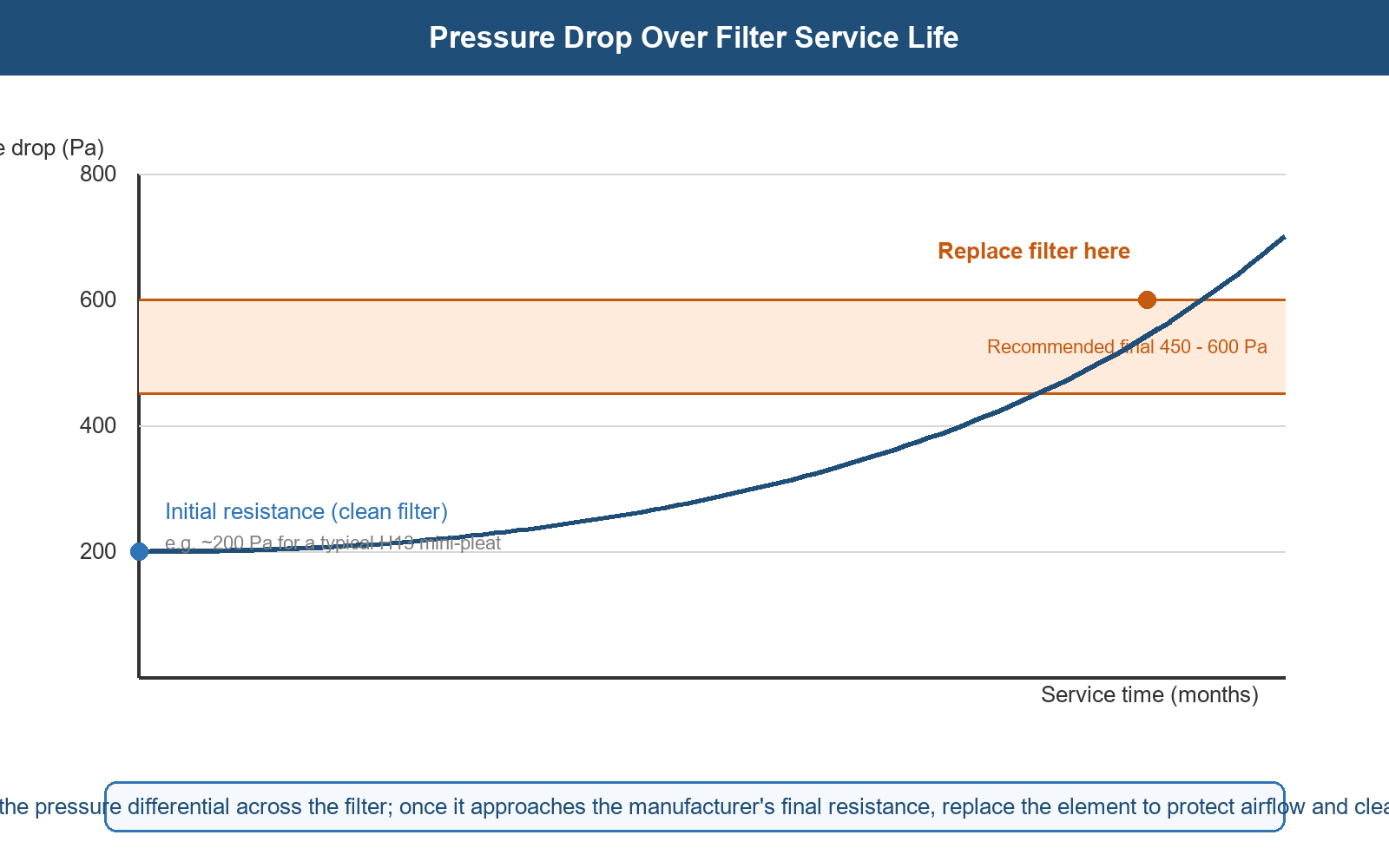
Figure 4. Pressure drop rises as the filter loads; replace when it approaches the manufacturer’s final resistance.
Step 4 — Choose the frame material
Table 2. Frame material comparison.
| Frame material | Advantages | Typical use |
|---|---|---|
| Aluminum | Light, corrosion-resistant, clean finish | Mini-pleat HEPA, cleanroom terminal |
| Galvanized steel | Cost-effective, strong | Separator HEPA, industrial systems |
| Stainless steel | Hygienic, chemical-resistant | Pharmaceutical, wet processes |
Mini-pleat HEPA filters with aluminum frames are the workhorse of cleanroom ceilings. Galvanized frames give a stronger, lower-cost option for industrial duty; stainless steel is specified where cleaning agents or humidity demand it.
Step 5 — Pick the right gasket and sealing system
The filter is only as good as its seal. For standard ceiling grids, EVA or PU gaskets compress against the frame edge to make a leak-tight fit. For ISO 5 and cleaner, knife-edge gel-seal housings are often preferred because they avoid gasket compression issues.
After installation, a PAO/DOP scan test per ISO 14644-3 verifies there are no leaks at the seal or the media — challenge the upstream at close to 100% concentration and accept downstream scan readings at or below 0.01% for H13 (0.005% for H14). This is where cheap filters fail audits — budget for the test, not just the element.
Step 6 — Plan replacement before you install
- Monitor the pressure differential with a differential pressure gauge (e.g., magnehelic-type) or a digital transmitter; log readings weekly.
- With G4 + F7/F8 pre-filtration protecting it, a terminal HEPA typically lasts 5–10 years or longer. Replace it when the final resistance reaches about 2× the initial value, or when a leak test fails — not on a fixed age.
- Keep one spare set per zone; lead times for custom sizes can be long.
- Replace intermediate bag and box filters on schedule so the HEPA never sees the dirt load.
Good pre-filtration is the cheapest way to extend HEPA life. A G4 pre-filter plus an F7/F8 intermediate stage can double or triple terminal filter service life.
Specification extras professional buyers check
- Ask for serialized scan reports: every H13/H14 element should be individually scan-tested at the factory (per EN 1822 or IEST-RP-CC001) and shipped with its own test report.
- For semiconductor or optics lines, confirm low-outgassing media and any AMC (airborne molecular contamination) requirements — request VOC/outgassing data when the process is sensitive.
- Confirm temperature and humidity limits for media and gaskets against your process: standard HEPA media is typically rated to about 70–80 °C, while WISHE’s medium-efficiency box filters are rated to 100 °C and 100% RH.
How WISHE TECH can help
WISHE TECH engineers HEPA and intermediate filters around your project — custom sizes, efficiency grades, frame materials, gaskets and airflow ratings — with factory-direct pricing and export support for Southeast Asia, the Middle East and the Americas.
Need help selecting HEPA filters? Send your dimensions, target airflow and ISO class to our team via wishe.tech — we will reply with a product match and a technical datasheet.
About WISHE TECH — Factory-direct cleanroom systems and industrial filtration supplier with 20+ years of engineering experience. Six product categories cover cleanroom filtration, spray booth & coating filters, cleanroom equipment, build-out materials, static control & ESD, and coating & curing equipment, with OEM customization and export support for Southeast Asia, the Middle East and the Americas. Visit wishe.tech to request a quote.