

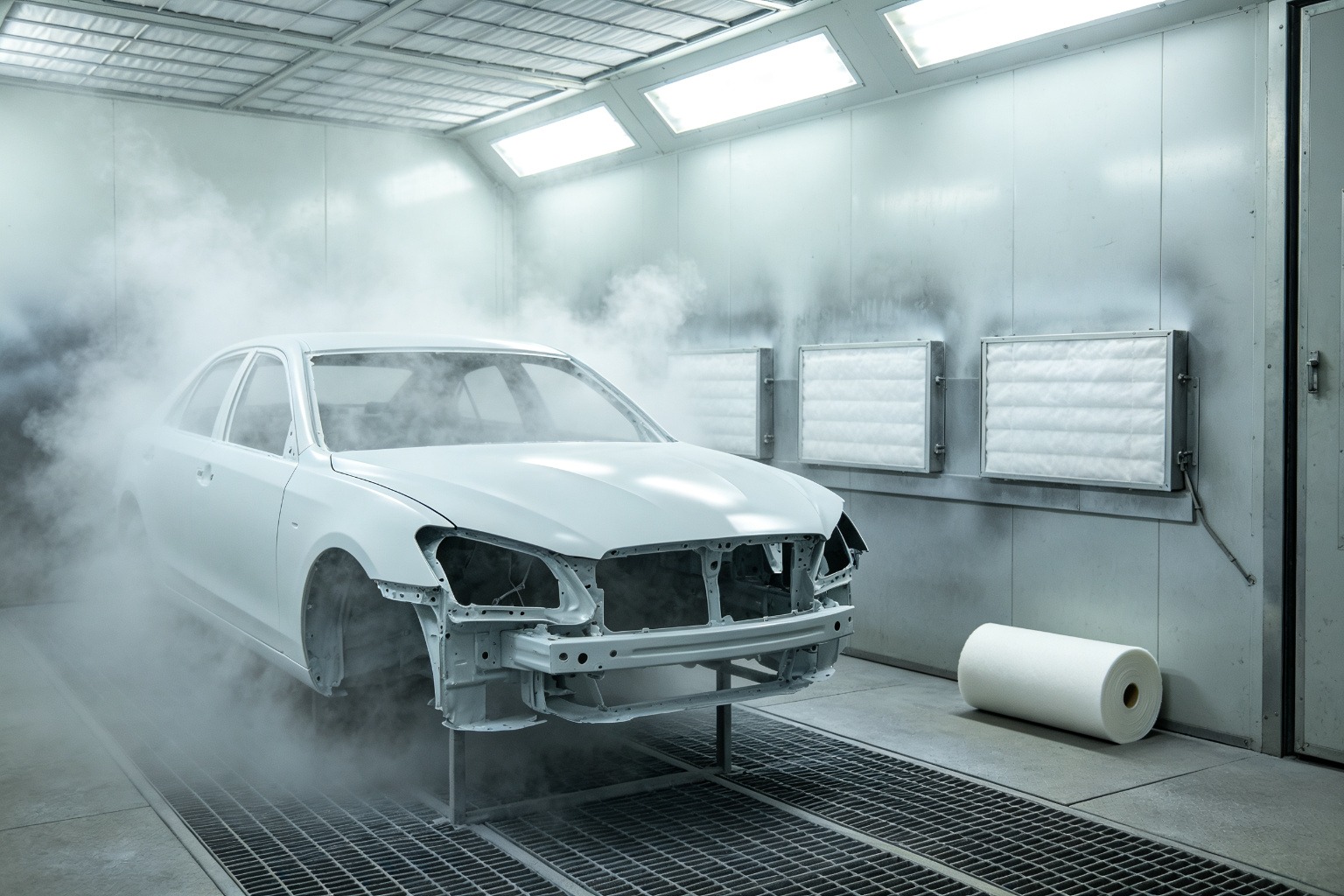
Figure 1. Every spray booth produces overspray that must be captured before it reaches the fan and stack.
Every spray booth produces overspray — paint particles that miss the workpiece and travel with the exhaust air. If the filtration train does its job, that overspray stays in the filter media. If not, it coats the booth, blocks ducts, loads up fans and sends sticky particulate into the environment. This guide compares the four most common paint mist filter media — filter cotton, pocket filters, paper box filters and DPA pocket filters — and shows where each belongs in a coating line.
How a spray booth filtration train works
A spray booth has two air paths. Supply air is drawn through intake filtration, usually primary filter cotton, so the work zone is fed with clean air. Paint-laden air is pulled through the exhaust side, where the filtration train captures overspray before the air reaches the fan and stack.
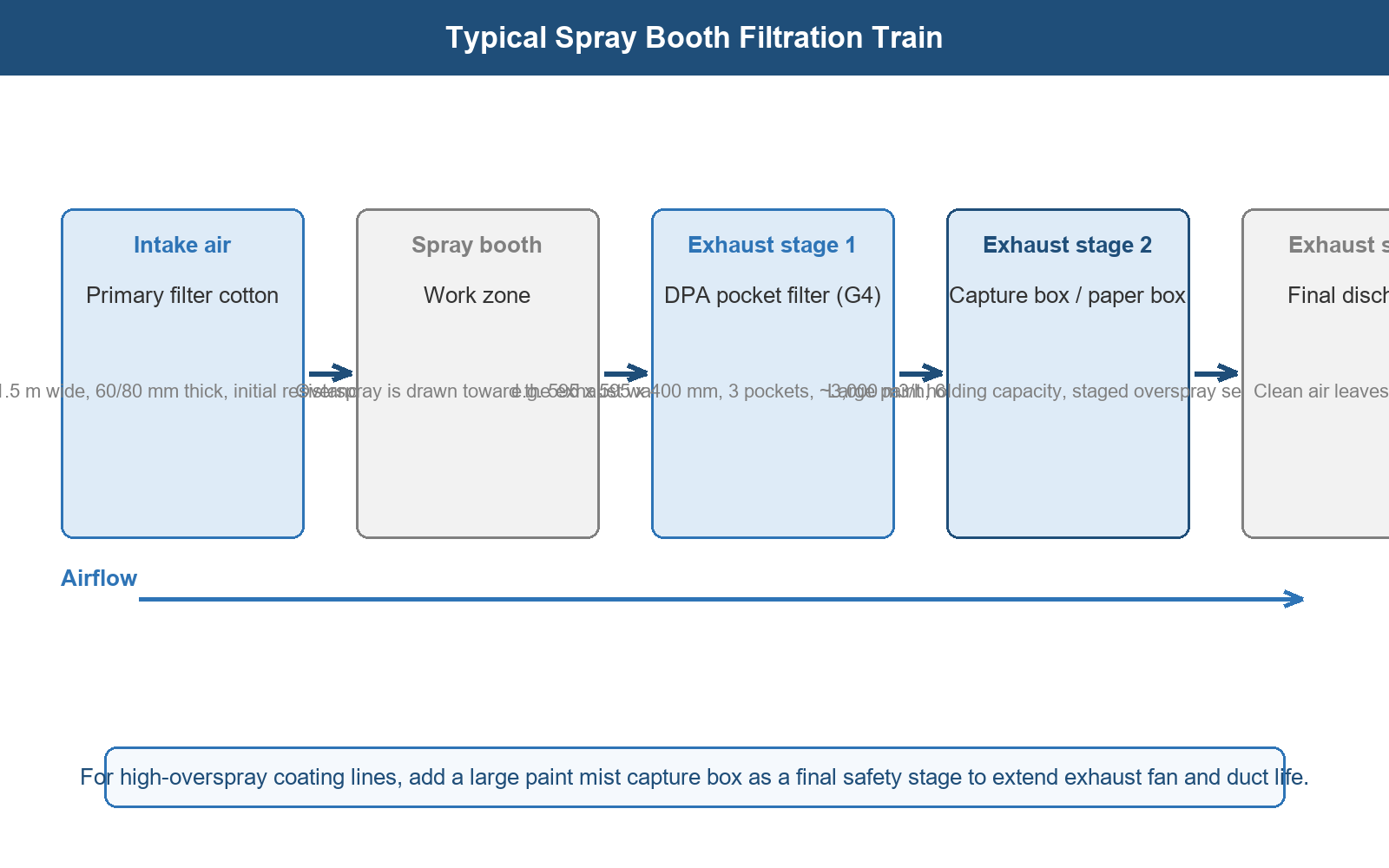
Figure 2. A typical spray booth filtration train from intake cotton to final discharge.
The exhaust side typically runs two or more stages: a first stage that catches the bulk of wet overspray, and a second stage, often a capture box, that removes what remains. Staging matters because no single media type is good at everything — high capacity, low resistance and fine capture pull in different directions.
Primary filter cotton — the workhorse
Filter cotton is a rolled, non-woven media that is cut to size and fitted on intake panels and as the first exhaust stage. It is inexpensive, easy to replace and has a huge dust and paint holding capacity.
WISHE paint booth primary filter cotton is supplied in rolls of 10–50 m, widths from 0.6 m to 1.5 m and thicknesses of 60 mm or 80 mm. Recommended face velocity is 0.5–1.0 m/s with an initial resistance of just 30–40 Pa, so it protects the booth without starving the airflow.
Because it is a coarse G2–G4 media, cotton is a sacrificial first line: it stops lint, dust and the heaviest paint droplets, protecting everything downstream. Replace it when the face darkens or pressure drop climbs — it is cheap insurance.
DPA pocket filters — more surface, longer life
A pocket filter multiplies surface area by folding the media into deep bags, so it holds more paint and lasts longer than a flat panel in the same footprint.
WISHE’s DPA paint mist pocket filter is a G4 filter with a galvanized frame. The standard configuration is 595 × 595 × 400 mm with three pockets, rated at about 3,000 m³/h with an initial resistance of 60 Pa and a final resistance of 250 Pa. It is a first-stage exhaust filter for spray booths and coating lines, and custom sizes and bag depths are available.
Paper box and 3D capture boxes — the heavy-duty stage
For high-overspray lines — automotive painting, large-part coating — the last exhaust stage should be a capture box with serious holding capacity.
- Large paint mist capture box: high-capacity media arranged for staged overspray separation; protects the fan and duct from sticky buildup.
- 3D filter cotton capture box: structured 3D cotton media that combines higher paint holding capacity with better filtration efficiency than flat media.
These boxes sit behind the primary stage and are sized to the exhaust airflow. They are the difference between cleaning ducts every month and every year.
Side-by-side comparison
Table 1. Paint mist filter media compared.
| Media type | Typical grade | Best role | Dust holding | Initial resistance |
|---|---|---|---|---|
| Filter cotton | G2 – G4 | Intake + first exhaust stage | High | Very low (30–40 Pa) |
| DPA pocket filter | G4 – F6 | First-stage exhaust | High | Low (60 Pa) |
| Paper box filter | F7 – F9 | Fine capture, staged separation | Very high | Medium |
| 3D cotton capture box | G4 + 3D | Heavy overspray, final capture | Very high | Medium |
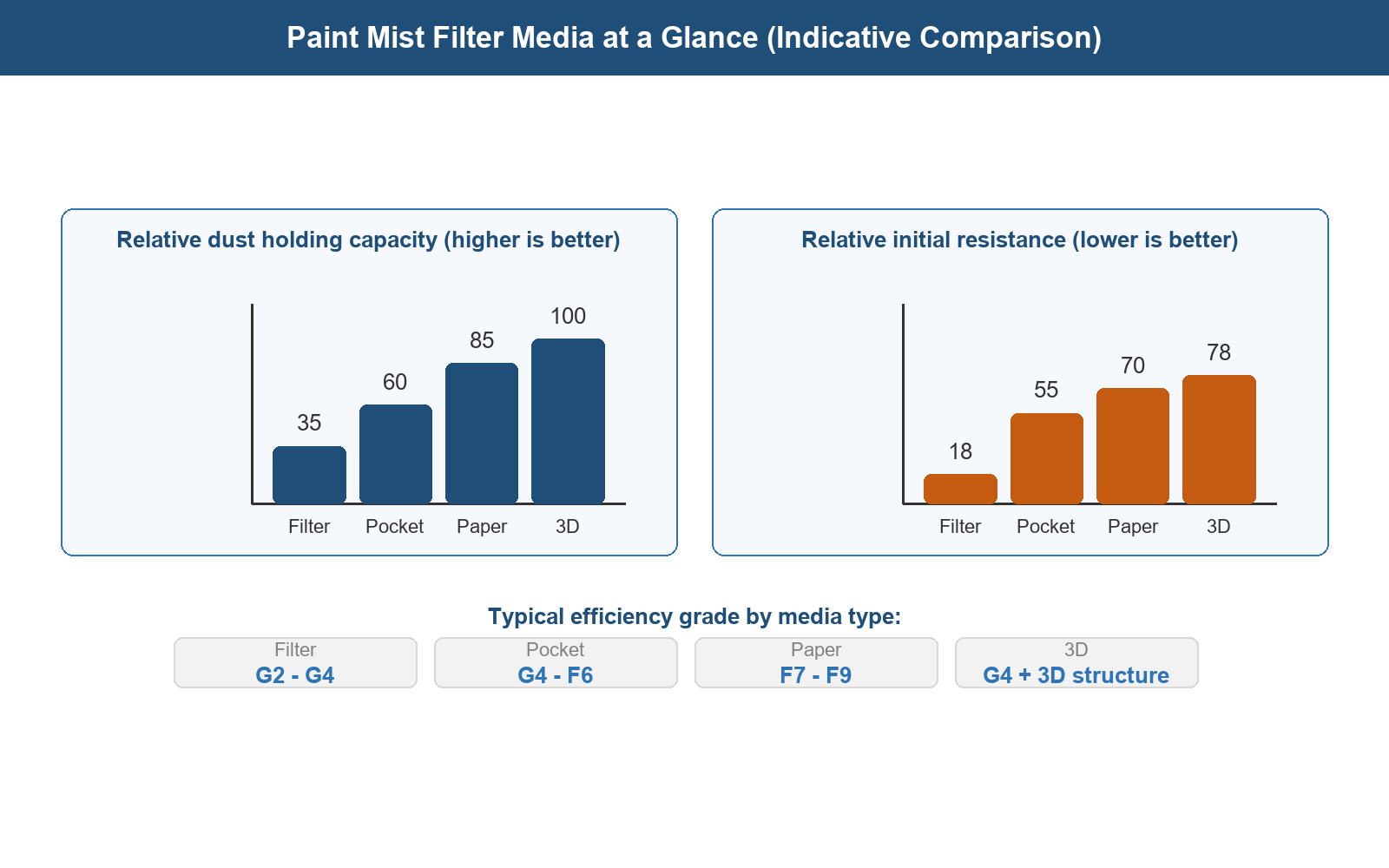
Figure 3. Indicative comparison of capacity and resistance across the four media types.
Read the chart as relative guidance: cotton is the cheapest per square meter but needs frequent replacement; pocket filters balance cost and life; box filters carry the load in heavy lines; 3D cotton boxes add efficiency without giving up capacity.
How to choose the right media
- Light duty (touch-up booths, furniture spraying): primary filter cotton on intake, plus a DPA pocket or small box on exhaust.
- Medium duty (general industrial coating): filter cotton → DPA pocket filter → capture box.
- Heavy duty (automotive lines, high film build): filter cotton → DPA pocket filter → large or 3D capture box, with a pressure-drop monitoring schedule.
- Match width and thickness to your booth frame; WISHE cuts media to size and can match your existing replacement schedule.
Cost per m³ of air treated is the number that matters: a slightly more expensive media that holds twice as much paint usually wins.
Keep the train healthy
Monitor pressure drop across each stage, log filter changes, and keep a full spare set on site. A balanced train — coarse first, fine last — protects your booth finish quality, your fans and your compliance records.
Tell us your booth type, exhaust airflow and overspray load — WISHE will recommend the right media and custom sizes for your spray booth. Contact us through wishe.tech.
About WISHE TECH — Factory-direct cleanroom systems and industrial filtration supplier with 20+ years of engineering experience. Six product categories cover cleanroom filtration, spray booth & coating filters, cleanroom equipment, build-out materials, static control & ESD, and coating & curing equipment, with OEM customization and export support for Southeast Asia, the Middle East and the Americas. Visit wishe.tech to request a quote.